admin_suk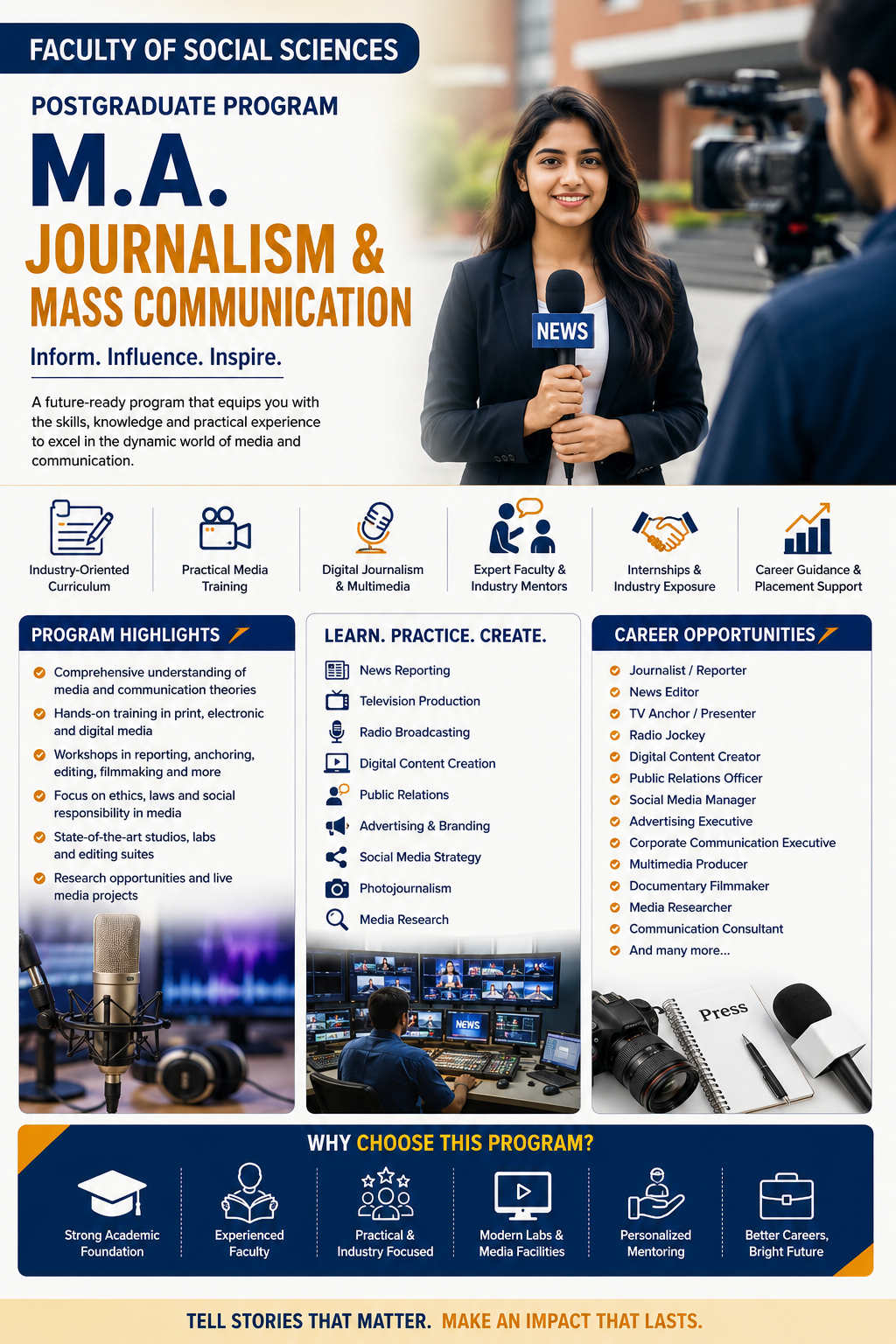
Shape Stories That Inform, Inspire, and Influence
Admissions Open for Academic Year 2026–27
In today’s digital age, information travels faster than ever before. From television and newspapers to digital media, podcasts, social media, and multimedia platforms, journalism and mass communication have become powerful tools for informing society, shaping public opinion, and driving positive change.
The Faculty of Social Sciences at Sharnbasva University, Kalaburagi offers a dynamic Master of Arts (M.A.) in Journalism & Mass Communication program that prepares students for exciting careers in journalism, broadcasting, digital media, public relations, advertising, content creation, and corporate communication.
The program combines academic knowledge with practical media training, enabling students to become ethical, creative, and industry-ready communication professionals.
Why Choose M.A. in Journalism & Mass Communication?
The media industry is constantly evolving with the rapid growth of digital technologies, online journalism, artificial intelligence, and multimedia storytelling.
This postgraduate program equips students to:
- Understand modern media ecosystems
- Develop professional reporting and writing skills
- Create engaging digital content
- Learn multimedia production techniques
- Build communication and leadership abilities
- Understand media ethics and laws
- Adapt to emerging communication technologies
Graduates become professionals capable of communicating effectively across print, broadcast, and digital platforms.
About the Program
The M.A. in Journalism & Mass Communication offers a balanced blend of theory, practical training, and industry exposure.
Students study a wide range of subjects including:
- Journalism Principles
- News Reporting and Editing
- Digital Journalism
- Television and Radio Production
- Media Writing
- Public Relations
- Corporate Communication
- Advertising and Brand Communication
- Media Ethics and Laws
- Communication Research
- Photojournalism
- Multimedia Storytelling
- Social Media Communication
The curriculum is designed to meet the changing demands of today’s global media industry.
Practical Media Training
Learning extends beyond the classroom through hands-on media experiences.
Students participate in:
- News Writing Exercises
- Television News Production
- Radio Broadcasting
- Podcast Creation
- Video Editing
- Documentary Production
- Photography Workshops
- Digital Content Creation
- Media Campaign Projects
These practical activities help students develop confidence and professional competence.
Digital Media and Emerging Technologies
Modern journalism increasingly relies on digital platforms and technology.
Students gain exposure to:
- Online Journalism
- Social Media Strategy
- Mobile Journalism
- Multimedia Reporting
- Podcast Production
- Digital Publishing
- AI in Media
- Data Journalism
- Content Marketing
- Visual Storytelling
These skills prepare graduates for the future of media and communication.
Research and Communication Excellence
The Faculty of Social Sciences encourages students to explore contemporary communication issues through research.
Students engage in:
- Media Research Projects
- Case Studies
- Communication Surveys
- Public Opinion Analysis
- Media Campaign Design
- Research Presentations
- Seminars and Workshops
Research-oriented learning strengthens analytical thinking and communication skills.
Industry Exposure
Students benefit from opportunities to interact with media professionals and industry experts through:
- Media Internships
- Guest Lectures
- Industry Visits
- Journalism Workshops
- Press Conferences
- Newsroom Simulations
- Communication Projects
These experiences bridge the gap between classroom learning and professional practice.
Skills Developed Through the Program
The M.A. program develops valuable professional competencies, including:
- News Reporting
- Creative Writing
- Public Speaking
- Interviewing Skills
- Digital Storytelling
- Video Production
- Photography
- Critical Thinking
- Media Research
- Content Strategy
- Leadership
- Communication Ethics
These skills are highly valued across media organizations and corporate sectors.
Career Opportunities After M.A. Journalism & Mass Communication
Graduates can pursue careers in diverse media and communication fields.
Career opportunities include:
- Journalist
- News Reporter
- News Editor
- Television Anchor
- Radio Jockey
- Digital Content Creator
- Multimedia Journalist
- Public Relations Officer
- Corporate Communication Executive
- Social Media Manager
- Advertising Executive
- Media Researcher
- Documentary Filmmaker
- Content Strategist
- Communication Consultant
Graduates are employed across newspapers, television channels, digital media companies, advertising agencies, public relations firms, corporate organizations, government departments, NGOs, and educational institutions.
Higher Education Opportunities
After completing the program, students may pursue:
- Ph.D. in Journalism
- Ph.D. in Mass Communication
- Media Research
- Film and Television Studies
- Digital Communication
- Communication Policy Studies
- Media Management
- International Communication
Higher education opens pathways to academic careers, research, and leadership roles in media.
Why Choose Sharnbasva University?
The Faculty of Social Sciences provides an engaging academic environment that nurtures creativity, professionalism, and responsible journalism.
Program Highlights
✔ Industry-Oriented Curriculum
✔ Experienced Faculty Members
✔ Practical Media Training
✔ Digital Journalism Focus
✔ Multimedia Learning Environment
✔ Research and Innovation Support
✔ Internship Opportunities
✔ Communication Skill Development
✔ Career Guidance and Placement Assistance
✔ Holistic Personality Development
The university prepares students to become ethical media professionals capable of making meaningful contributions to society.
Preparing Future Media Leaders
As communication technologies continue to evolve, skilled journalists and media professionals are needed more than ever to deliver accurate information, promote responsible reporting, and connect communities.
The M.A. in Journalism & Mass Communication equips students with the creativity, technical expertise, and ethical values required to succeed in today’s competitive media landscape.
Graduates leave the university ready to inform, inspire, educate, and influence society through responsible communication.
The M.A. in Journalism & Mass Communication at the Faculty of Social Sciences, Sharnbasva University, Kalaburagi offers students an exceptional opportunity to build successful careers in journalism, broadcasting, digital media, public relations, advertising, and corporate communication.
Through a combination of academic excellence, practical training, industry exposure, and modern media education, the program prepares graduates to become confident communication professionals and future media leaders.
If you are passionate about storytelling, current affairs, digital media, and making a positive impact through communication, this postgraduate program provides the perfect foundation for your future.
Report with Integrity. Communicate with Purpose. Lead the Future of Media.