admin_suk
Importance of Skill-Based Education for University Students: Preparing for a Career-Ready Future
A university education is an important step towards building a successful career. However, academic qualifications alone may not always be enough to meet the expectations of today’s competitive employment market. Employers increasingly look for graduates who can apply their knowledge, communicate effectively, solve problems, adapt to new technologies and work confidently in professional environments.
This is where skill-based education becomes important. It connects academic learning with practical abilities, helping students understand how their knowledge can be applied in real-world situations.
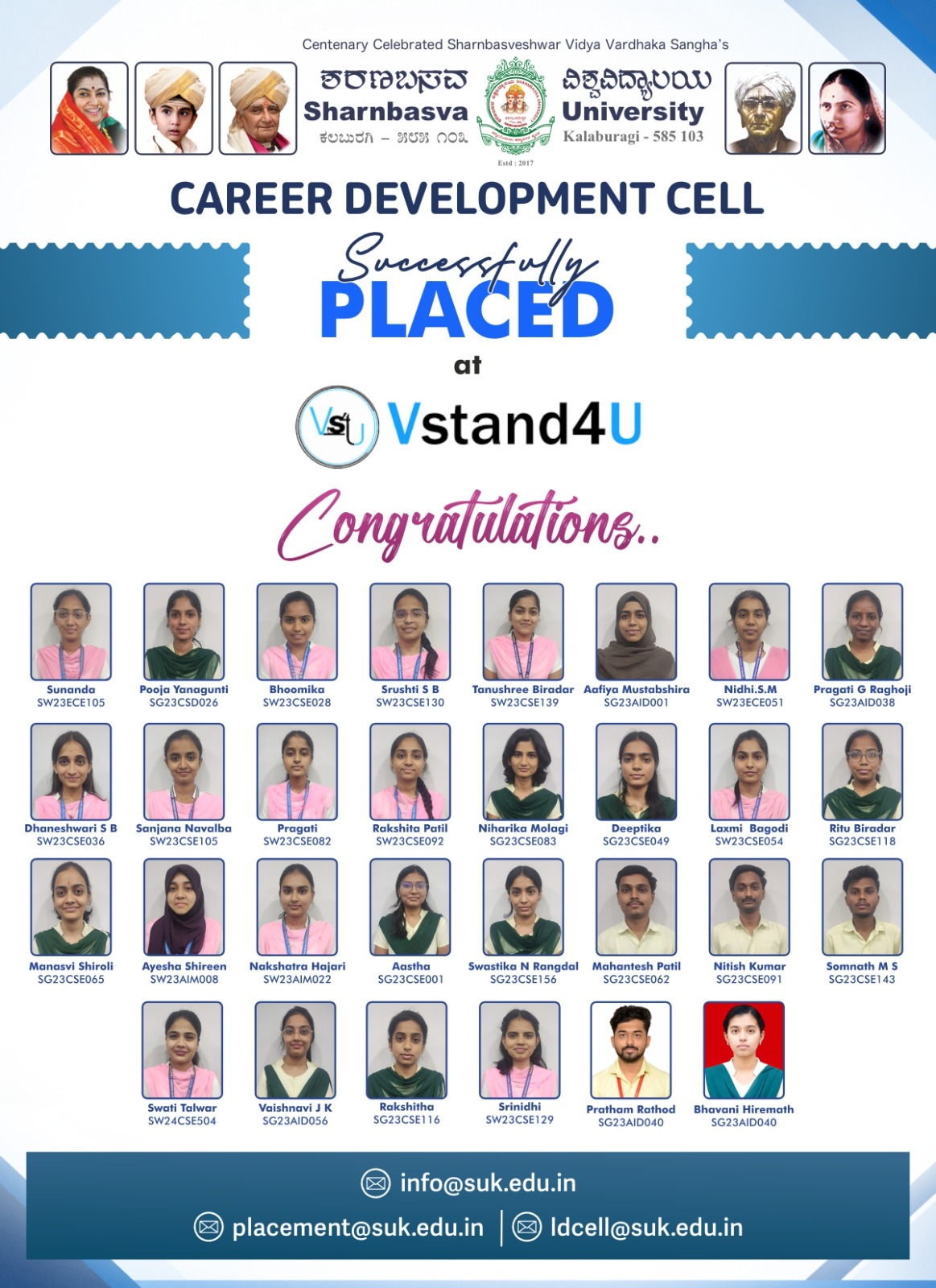
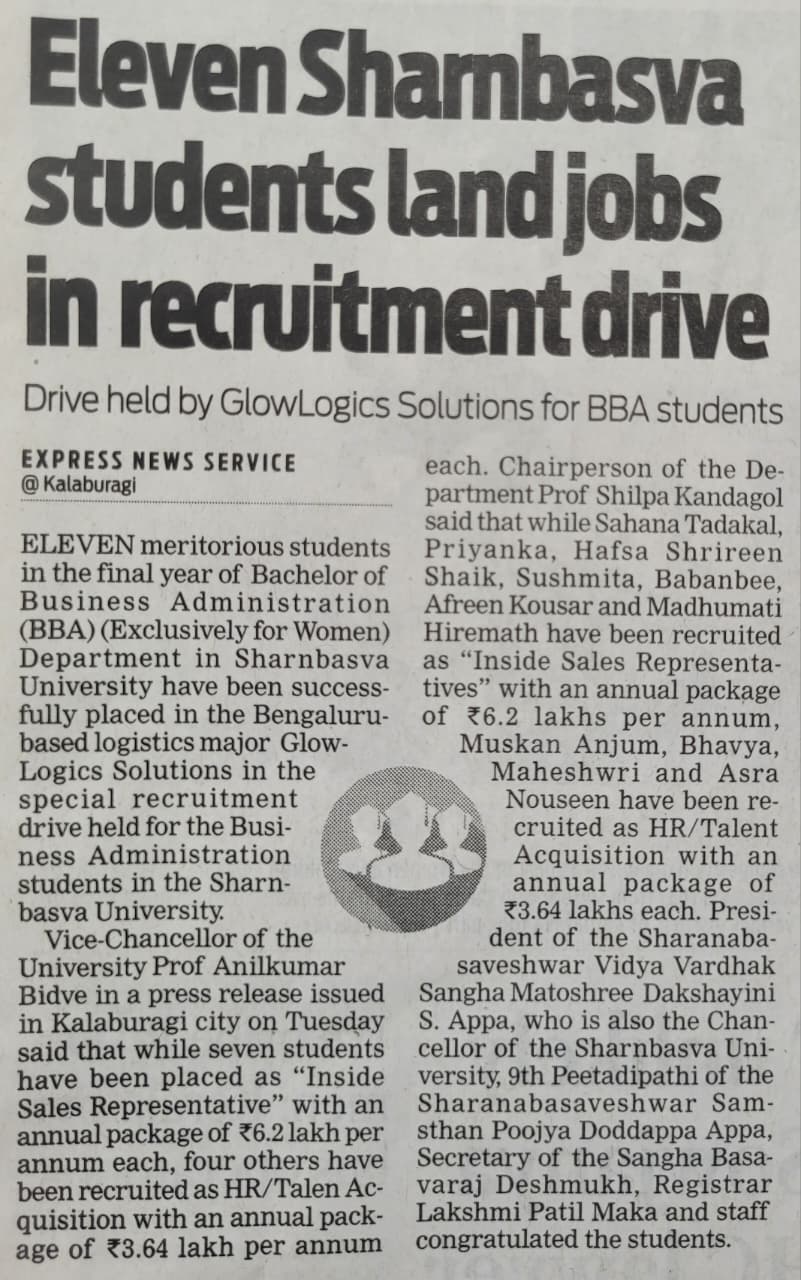
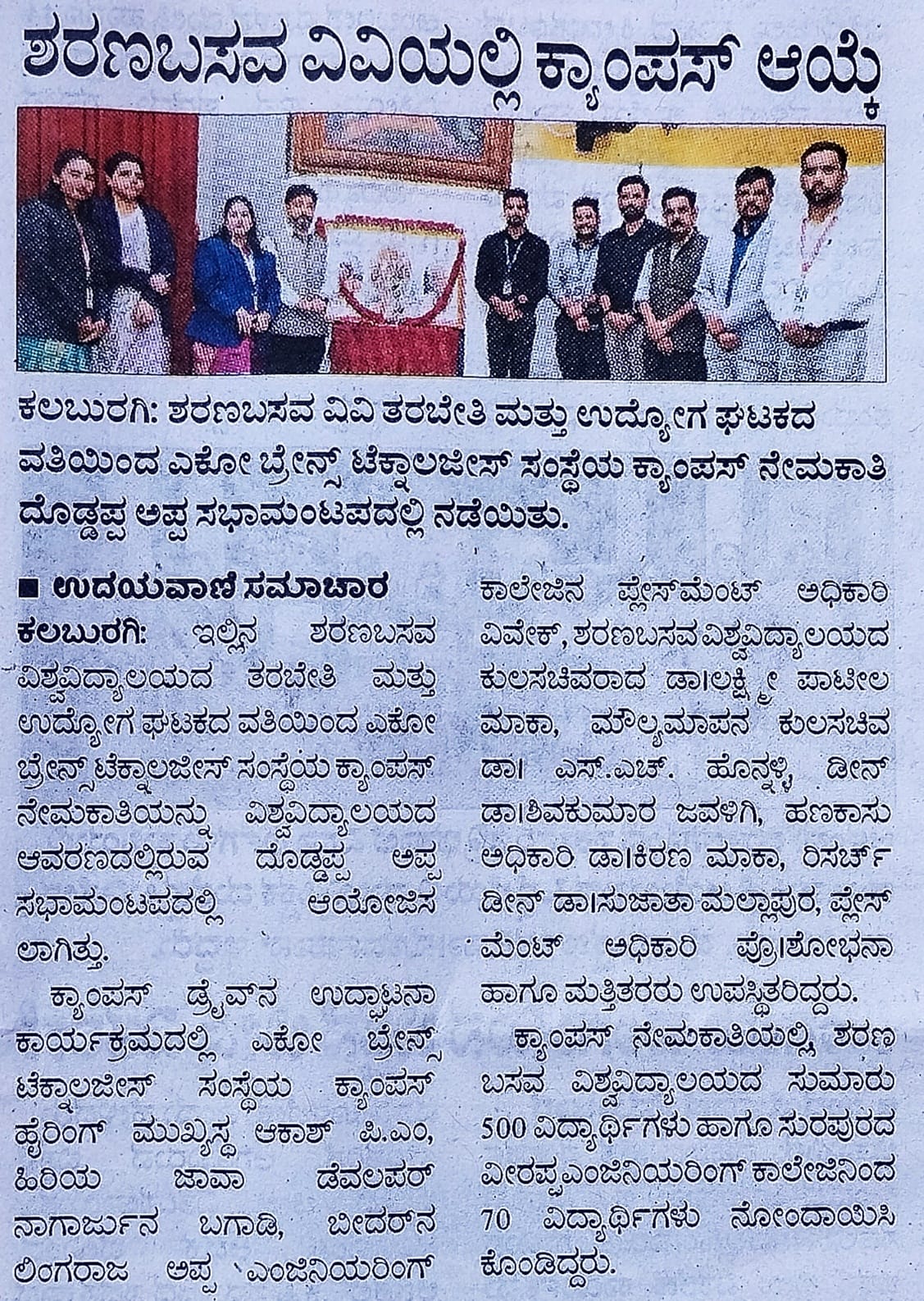
At Sharnbasva University, Kalaburagi, skill development and employability are important parts of the student development approach. Through its Career Development Centre, domain-specific training, industry interactions, workshops, internships and placement-related activities, the university works towards helping students develop the competencies required for professional success.
What Is Skill-Based Education?
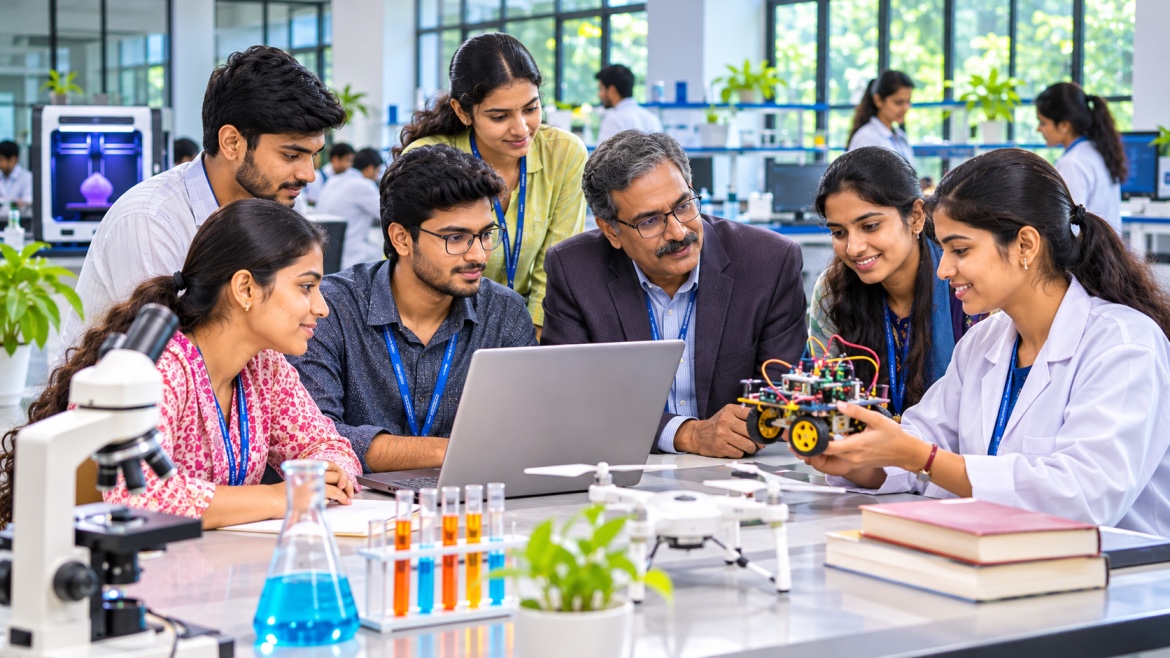
Skill-based education is a learning approach that focuses on developing practical abilities alongside academic knowledge. It helps students move beyond understanding concepts in textbooks and learn how to apply them in different situations.
These skills can be broadly divided into three categories:
Technical Skills: These are specialised abilities related to a particular subject or profession. Examples include programming, data analysis, engineering design, digital marketing, financial analysis and laboratory techniques.
Soft Skills: These include communication, teamwork, leadership, time management, adaptability, critical thinking and problem-solving.
Professional Skills: These involve workplace readiness, presentation, project management, business communication, professional ethics, interview preparation and industry awareness.
A balanced combination of these skills helps graduates become more confident, capable and prepared for employment or entrepreneurship.
Why Do University Students Need Skill-Based Education?
The professional world is continuously changing. New technologies, evolving business models and changing industry requirements are creating new expectations from graduates.
Skill-based learning helps students prepare for these changes in several ways.
1. Improves Employability
Employability involves more than obtaining a degree. Employers often assess a candidate’s practical knowledge, communication abilities, analytical thinking and willingness to learn.
Students who participate in skill-development activities can become better prepared for recruitment processes and workplace responsibilities.
2. Bridges the Gap Between Theory and Practice
Classroom education provides the foundation for understanding a subject. Practical training helps students apply that understanding.
Workshops, laboratory activities, internships, live projects, technical competitions and industry visits provide opportunities to experience how academic concepts are used in professional environments.
3. Develops Communication and Leadership
Effective communication is essential in almost every profession. Students need to express ideas clearly, participate in discussions, prepare presentations and collaborate with others.
Leadership and teamwork activities help students become more confident in taking responsibility, coordinating tasks and contributing to collective goals.
4. Encourages Entrepreneurship and Innovation
Not every graduate chooses a conventional employment path. Some students may wish to establish businesses, develop products or build technology-based solutions.
Skills such as business planning, financial management, problem-solving, innovation and customer understanding can help aspiring entrepreneurs transform ideas into practical opportunities.
5. Builds Confidence and Adaptability
Entering the professional world can be challenging for fresh graduates. Exposure to practical assignments, mock interviews, presentations and group activities helps students become familiar with workplace expectations.
It also encourages them to adapt to new situations, accept feedback and continuously improve their abilities.
Important Skills Every University Student Should Develop
Regardless of their chosen academic discipline, students can benefit from developing a combination of technical, professional and interpersonal skills.
Some particularly valuable areas include:
Digital Literacy: Understanding digital tools, online collaboration platforms, information management and technology applications.
Artificial Intelligence Awareness: Learning the fundamentals of AI, understanding its applications and developing the ability to use AI tools responsibly.
Communication Skills: Improving spoken and written communication, presentation techniques and professional interaction.
Critical Thinking: Analysing information, evaluating alternatives and making informed decisions.
Problem-Solving: Identifying challenges, understanding their causes and developing practical solutions.
Teamwork and Collaboration: Working effectively with people from different backgrounds and areas of expertise.
Entrepreneurial Thinking: Understanding opportunities, developing business ideas and learning how to create value.
Time and Project Management: Planning activities, meeting deadlines and managing responsibilities effectively.
Developing these abilities during university education can help students prepare for a wider range of career opportunities.
Skill-Based Learning Across Different Academic Disciplines
Skill requirements differ from one profession to another. Therefore, skill development should be connected to the academic discipline and career interests of each student.
At Sharnbasva University, students from different faculties can explore domain-specific training and professional development opportunities.
Engineering and Technology
Engineering students can strengthen their technical capabilities through programming, software development, artificial intelligence, machine learning, cybersecurity, electronics, CAD, renewable energy technologies, robotics and other specialised areas.
Practical projects, technical workshops and certification-oriented learning can further support their professional preparation.
Computer Applications
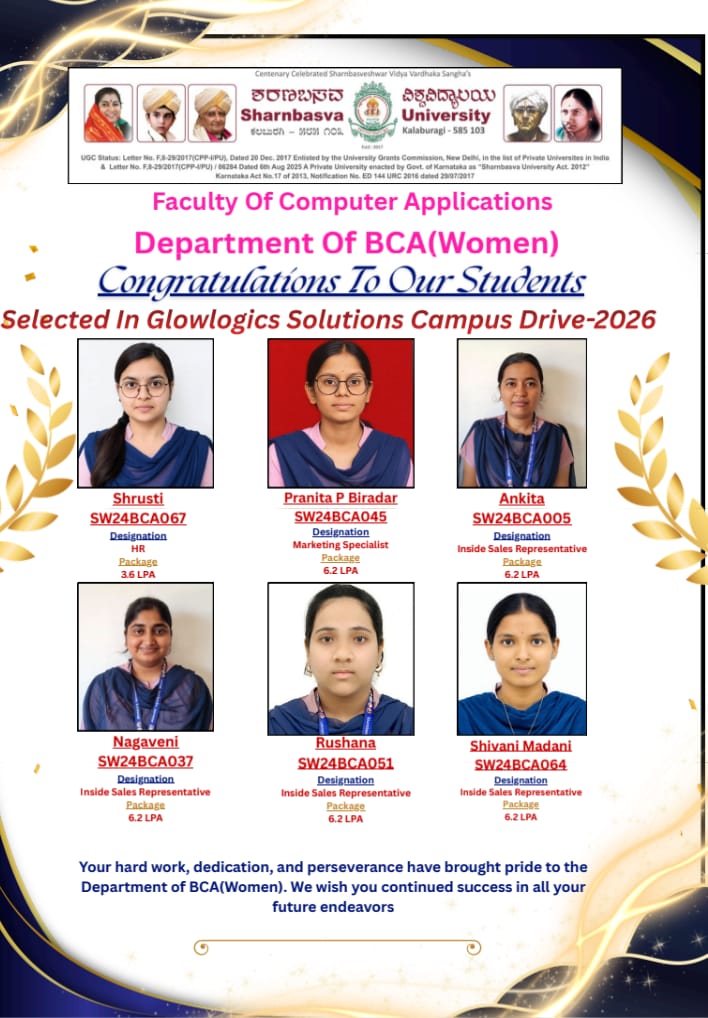
Students pursuing BCA and MCA programmes can benefit from skills in programming languages, web development, mobile applications, database management, cloud computing, artificial intelligence and cybersecurity.
These areas can help students prepare for opportunities in software development, IT services and emerging technology sectors.
Business Studies
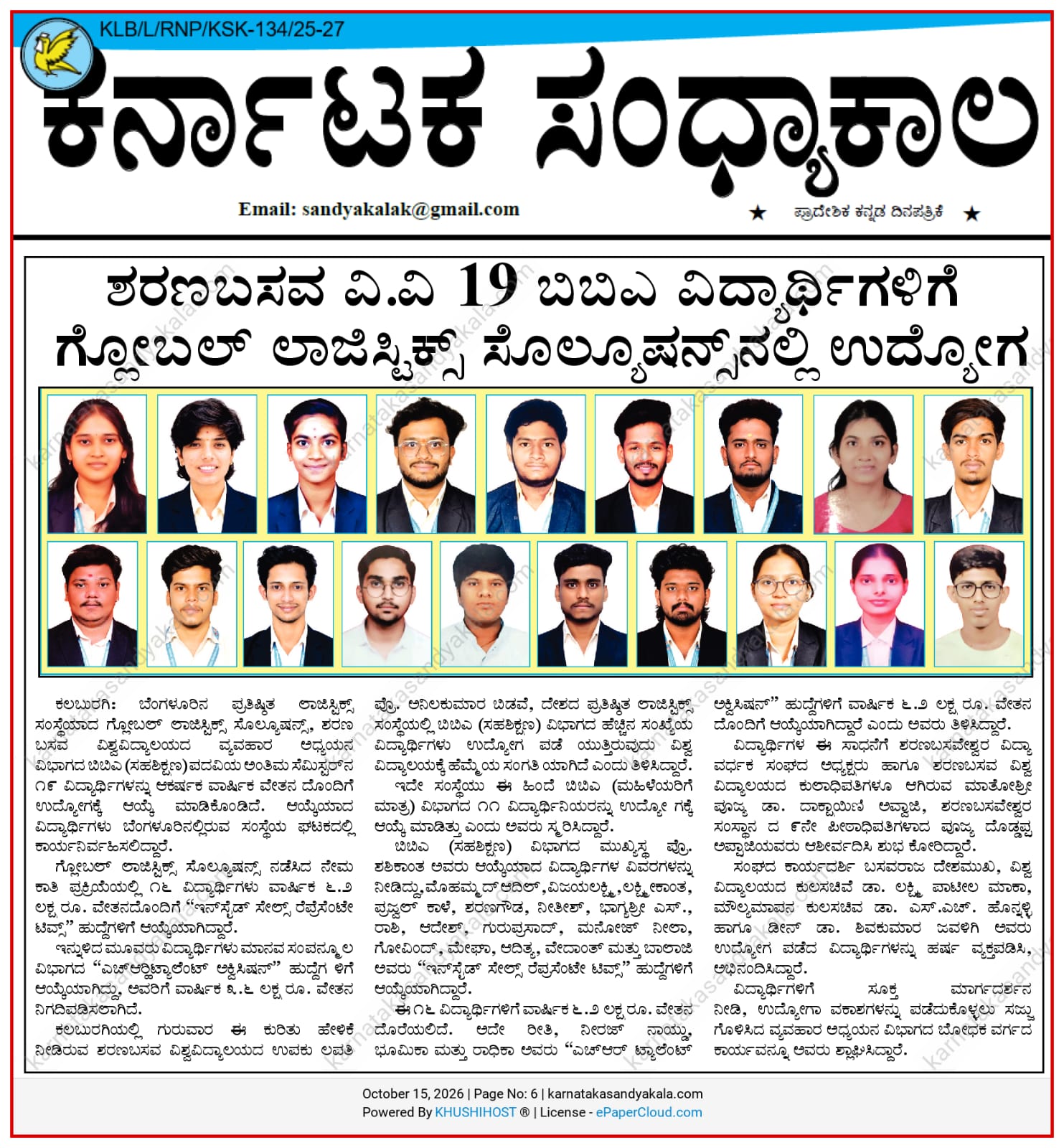
BBA and MBA students can develop competencies in business analytics, marketing management, finance, human resources, entrepreneurship, leadership, digital marketing and business communication.
Such skills are valuable for students interested in corporate careers, business administration and starting their own ventures.
Science and Technology
Science students can strengthen their practical knowledge through laboratory techniques, research methodology, scientific instrumentation, data analysis and subject-specific technical training.
These abilities can support opportunities in research, education, industry and scientific services.
Other Academic Disciplines
Students from architecture, pharmaceutical sciences, social sciences, languages and fine arts can also benefit from discipline-specific practical training, digital literacy, communication, research skills and professional development.
The objective is to ensure that skill development complements academic specialisation rather than remaining separate from it.
Role of the Career Development Centre at Sharnbasva University
The Career Development Centre (CDC) at Sharnbasva University plays an important role in connecting students with professional development and employment opportunities.
Its approach extends beyond conventional placement activities. The centre focuses on developing employability skills, strengthening core competencies, building industry connections and helping students understand professional expectations.
The university’s published training and placement information highlights several activities, including:
- Faculty-specific technical and domain training.
- Aptitude and reasoning preparation.
- Communication and soft-skill development.
- Resume preparation and interview skills.
- Industry interactions and expert-led workshops.
- Internships and industry-oriented projects.
- Technical seminars, hackathons and guest lectures.
- Certification-oriented training opportunities.
These activities help students gain exposure to professional environments and understand how their academic knowledge can be applied in the workplace.
Industry Collaboration and Practical Exposure
Industry collaboration is an important part of skill development. Interaction with professionals and organisations helps students understand current industry practices, emerging technologies and workplace expectations.
Sharnbasva University has established collaborations and MoUs with organisations to support skill development, industry-specific training and internship opportunities.
Such partnerships can provide access to technical learning, specialised training and exposure to industry tools and practices.
When students combine these experiences with classroom education, they gain a broader understanding of their chosen professions.
Skill Development and the Future of Employment
The future workplace will increasingly require individuals who can combine subject expertise with digital knowledge, creativity and adaptability.
Artificial intelligence, automation, data analytics, cybersecurity, digital business and sustainable technologies are changing the nature of professional roles across industries.
Students who develop a habit of continuous learning can be better prepared to respond to these changes. They should view graduation not as the end of learning but as the beginning of continuous professional development.
Universities therefore have an important responsibility to encourage practical learning, industry engagement and opportunities for students to strengthen their capabilities.
How Students Can Make the Most of Skill-Based Learning
Students can take an active role in their own professional development by following a few practical steps:
- Identify the technical and professional skills relevant to their chosen career.
- Participate in workshops, seminars and training programmes.
- Work on practical projects and build a portfolio of achievements.
- Explore internships and industry interaction opportunities.
- Improve communication and presentation abilities.
- Learn relevant digital tools and emerging technologies.
- Participate in competitions, hackathons and collaborative activities.
- Seek feedback from faculty members, mentors and industry professionals.
- Explore recognised certifications where relevant.
- Continue upgrading skills even after completing their degree.
Consistent effort and practical experience can make a significant difference in a student’s professional journey.
Building Future-Ready Graduates at Sharnbasva University
At Sharnbasva University, Kalaburagi, skill development is an important part of the broader approach to student growth and career preparation. Through its Career Development Centre, domain-specific training, industry interactions, internships and professional development initiatives, the university seeks to help students develop the knowledge and abilities needed to succeed beyond the classroom.
The university’s emphasis on academic learning, practical exposure and employability reflects the growing importance of preparing graduates for a dynamic professional environment.
A degree provides knowledge. Skills give students the confidence and ability to apply that knowledge. Together, they create a stronger foundation for career success.
As students prepare for the opportunities and challenges ahead, skill-based education can help them become not just qualified graduates, but capable professionals, innovative thinkers and responsible contributors to society.
Sharnbasva University – Empowering students with knowledge, skills and opportunities for the future.